Buy casa-antigo.eu ?
We are moving the project
casa-antigo.eu .
Are you interested in purchasing the domain
casa-antigo.eu ?
domain@kv-gmbh.de · 0541-91531010
Buy casa-antigo.eu ?
Is the selection of African elephants there stabilizing selection and directional selection?
The selection of African elephants can be considered stabilizing selection. Stabilizing selection occurs when the average phenotype is favored, and extreme phenotypes are selected against. In the case of African elephants, traits such as tusk size and body size may be under stabilizing selection, as individuals with average-sized tusks and bodies are more likely to survive and reproduce. On the other hand, directional selection may also be at play in certain traits of African elephants. Directional selection occurs when one extreme phenotype is favored over the other, leading to a shift in the average phenotype over time. For example, if there is increased poaching pressure on elephants with larger tusks, this could lead to directional selection favoring individuals with smaller tusks. Overall, the selection of African elephants likely involves a combination of stabilizing and directional selection, depending on the specific traits and environmental pressures at play. **
For antique rustic oak furniture that you would like to lighten, what type of wood would be suitable?
For antique rustic oak furniture that you would like to lighten, a suitable wood type would be pine. Pine is a lighter wood with a natural grain that can complement the rustic style of the oak furniture. It is also easier to work with and can be stained or painted to achieve the desired lighter finish. Additionally, pine is a durable wood that can withstand the wear and tear of everyday use, making it a practical choice for furniture restoration. **

Similar search terms for Ribolla-Gialla-Selection-Paraschos
Top-Angebote
Products related to Ribolla-Gialla-Selection-Paraschos:
-
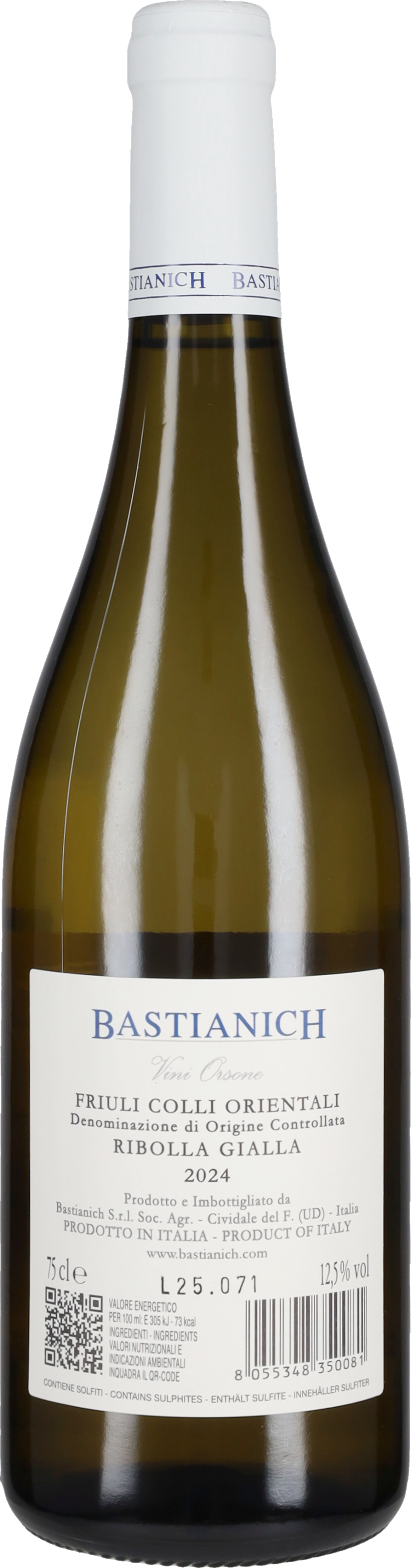
Ribolla Gialla Bastianich 2025maturation of 6 months on the fine lees, stirred weekly through the practice of batonnage. All this to allow the grape variety to best express its typical and fresh personality. The Ribolla Gialla Bastianich is characterized by an aromatic profile that leans towards floral and fruity notes of citrus and yellow-fleshed fruit, with a clear and perpetual mineral background that clearly reveals its place of origin. On the palate, this minerality is well perceived and materializes in a peculiar salinity, very fine and elegant, capable of bringing balance with the other components. Joe Bastianich firmly believes that wine is the result of tradition and history: his passion is immersed in work and communicated through the glass.maturation of 6 months on the fine lees, stirred weekly through the practice of batonnage. All this to allow the grape variety to best express its typical and fresh personality. The Ribolla Gialla Bastianich is characterized by an aromatic profile that leans towards floral and fruity notes of citrus and yellow-fleshed fruit, with a clear and persistent mineral background that clearly reveals its place of origin. On the palate, this minerality is well perceived and materializes in a peculiar salinity, very fine and elegant, able to bring balance with the other components. Joe Bastianich firmly believes that wine is the result of tradition and history: his passion is immersed in the work and communicated through the glass.14,00 £*Shipping: 48,00 £Secure redirect to the provider
-
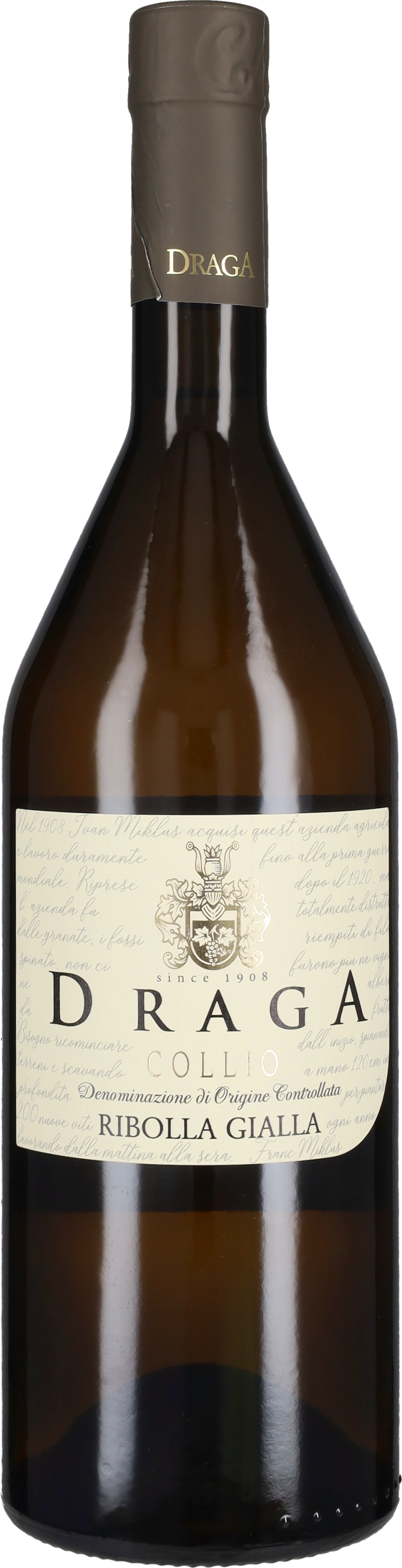
Ribolla Gialla Draga 2024The Ribolla Gialla from the Friulian winery Draga represents a fresh and mineral expression of this renowned traditional variety from the Collio region. The name Ribolla is thought to derive from the tendency of the must from this white grape to "reboil" vigorously during tumultuous fermentation, a time when techniques and technologies did not allow optimal control of fermentation temperature.Draga's Ribolla Gialla is crafted exclusively from grapes of the same white variety, grown without the use of herbicides on the so-called “ponca” soil, characterized by alternating layers of clay marl and sandstone, which are highly conducive to quality viticulture. The vines are located on hillside slopes at an altitude of 220 meters above sea level, in the area of San Floriano del Collio. Harvesting is done by hand with careful grape selection, followed by 24 hours of skin maceration at a temperature of 8-10°C. The must obtained from gentle pressing undergoes alcoholic fermentation in temperature-controlled stainless steel tanks, where the wine then rests for 7 months on the lees before final bottling.The Ribolla Gialla from the family-run Draga winery displays a straw-yellow color. Its aromas evoke floral and fruity notes reminiscent of white flowers, apple, and peach, supported by fresh citrus sensations. On the palate, it stands out for its minerality and freshness, elements that contribute to the wine's lively character, also marked by a pronounced citrusy finish. This Ribolla Gialla pairs perfectly with seafood dishes or lightly aged cheeses.17,00 £*Shipping: 48,00 £Secure redirect to the provider

-
Is the Bundeswehr selection test an impossible selection process?
The Bundeswehr selection test is not an impossible selection process, but it is certainly challenging. The test is designed to assess a candidate's physical fitness, mental aptitude, and leadership potential. While it may be difficult, it is not impossible for candidates to pass the selection test with proper preparation and determination. The test is meant to identify individuals who are capable of meeting the demands of serving in the German armed forces, and those who successfully pass the test demonstrate their readiness for the role. **
-
What is selection?
Selection is the process by which certain traits or characteristics become more common in a population over time due to their advantageous nature. It occurs through the differential survival and reproduction of individuals with these traits, leading to the passing on of these advantageous traits to future generations. Selection can be natural, where environmental factors determine which traits are favored, or artificial, where humans intentionally breed individuals with desired traits. Overall, selection plays a crucial role in shaping the genetic makeup of populations and driving evolution. **
-
What are the differences between natural selection and artificial selection?
Natural selection is the process by which organisms better adapted to their environment tend to survive and reproduce more successfully, leading to the evolution of species over time. On the other hand, artificial selection is the process by which humans intentionally select and breed organisms with specific traits to produce offspring with desired characteristics. While natural selection occurs in nature without human intervention, artificial selection is driven by human manipulation and breeding practices. Additionally, natural selection is a gradual process that occurs over generations, while artificial selection can produce rapid changes in traits within a few generations. **
-
What does selection mean?
Selection refers to the process of choosing individuals with specific traits or characteristics to reproduce, leading to a change in the frequency of those traits in a population over time. This process can be natural, such as when certain traits provide a survival advantage in a particular environment, or artificial, when humans intentionally breed individuals with desired traits. Selection is a key mechanism of evolution, driving the adaptation of populations to their environments. **

What is natural selection?
Natural selection is the process by which organisms that are better adapted to their environment are more likely to survive and reproduce, passing on their advantageous traits to their offspring. Over time, this leads to the accumulation of beneficial traits in a population, increasing its overall fitness and ability to thrive in its environment. Natural selection is a key mechanism of evolution, driving the gradual change and adaptation of species over generations. **
What is artificial selection?
Artificial selection is the process by which humans intentionally breed plants or animals with specific desirable traits in order to produce offspring with those traits. This process has been used for thousands of years to create domesticated plants and animals that are better suited for human needs, such as higher crop yields or more docile behavior. Through selective breeding, humans can influence the genetic makeup of a population to create organisms with desired characteristics. **
Top-Angebote
Products related to Ribolla-Gialla-Selection-Paraschos:
-
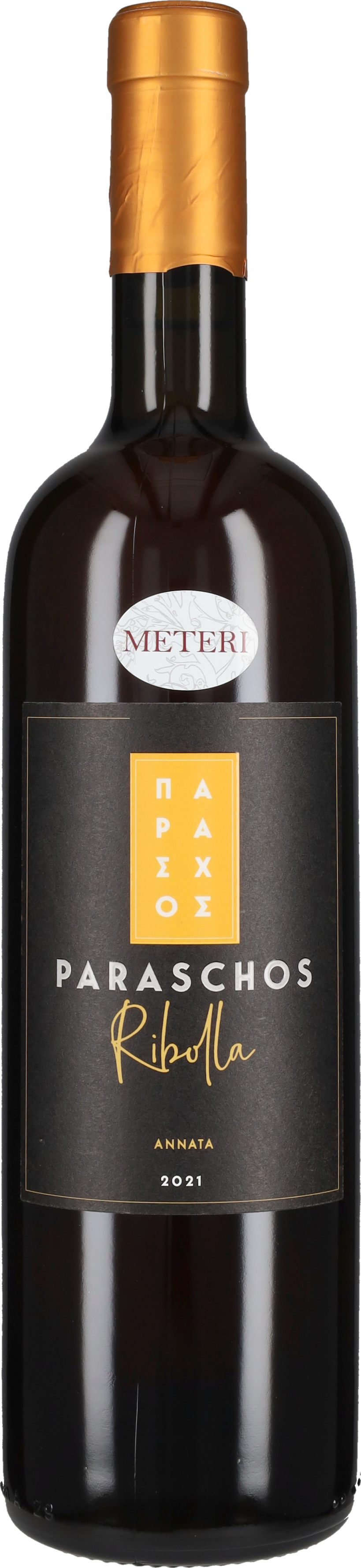
Ribolla Gialla 'Selection' Paraschos 2021La Ribolla Gialla "Selection" di Paraschos è un vino caleidsocopico e conturbante, espressione profonda e fedele del Collio vitivinicolo. Ribolla gialla, croce e delizia di ogni produttore locale, in virtù del suo carattere bizzoso e di una buccia estremamente sottile, difficile da gestire. Vitigno che, secondo la maggior parte dei vignaioli della zona, esige una macerazione sulle bucce e questa visione è condivisa dalla famiglia Paraschos, che ne restituisce una tra le più nitide e scintillanti versioni. Come sempre, in stile Paraschos, emerge la sincerità del liquido ma anche la sua estrema definizione, sintomo di una mano sapiente e leggera in vinificazione. Vivido ed elegante ritratto di San Floriano e Oslavia! Il "Selection" Ribolla Gialla è ottenuto da uve in purezza dell'omonimo vitigno, raccolte a piena maturazione fenolica e provenienti dalla vigna Slatnik sita nei comuni di San Floriano e Oslavia, che poggia sul tipico strato marnoso argilloso localmente detto “Ponka”. Nessun trattamento chimico in vigna e accurata vendemmia manuale, precedono la fermentazione spontanea con lieviti indigeni in anfore di terracotta della durata di 6 mesi, con breve macerazione sulle bucce. Il liquido affina per alcuni mesi in tini e botti di legno senza subire filtrazioni o aggiunte di solforosa. Il Paraschos Ribolla Gialla "Selection" scende nel bicchiere con la sua veste dorata, che vira verso l'ambrato. Naso dotato di ampiezza da fuoriclasse, che racchiude svariati richiami: in primis la frutta, che spazia dall'agrume alla pesca matura, poi la cannella e la vaniglia, e le erbe spontanee. Un continuo rimando tra note dolci e piccanti, dialettico. Sorso davvero emblematico, per la sua capacità di riunire in un nucleo compatto struttura, freschezza e sapidità, oltre ad un ricordo di tannino. Finale persistente e lungo, difficilmente dimenticabile. Vino a 360 gradi.49,00 £*Shipping: 48,00 £Secure redirect to the provider
-
Simcic Marjan Ribolla Gialla 'Cru Selection' Marjan Simcic 2024The Ribolla Gialla "Cru Selection" by Marjan Simcic is a white wine complex and endowed with a caressing texture, the result of a selection of old vines. We have already spent several words regarding Marjan Simcic, a talented winemaker from the Slovenian Collio, but with every tasting of his liquids, we can only reiterate how his bottles manage to combine a deep and personal style with an enviable tasting purity. 18 hectares of vineyard, located between Italy and Slovenia, cultivated without the use of any chemical or synthetic substances. And then a respectful work in the cellar, where fermentations occur spontaneously and the liquids obtained undergo no filtration. A magical terroir, in one of its clearest and most sparkling interpretations! The "Cru Selection" Ribolla Gialla is obtained from pure grapes of the same name, coming from a careful selection of vines over 50 years old, situated at 200-250 meters above sea level and placed on marl soils. Vineyards cultivated organically, and strictly manual harvesting, precede a winemaking process that also in the cellar occurs with extremely reduced intervention.extremely reduced. Spontaneous fermentation with maceration of the must on the skins for 6 days, without the liquid being filtered or clarified. Aging for 12 months in 3-hectoliter oak vats and for 11 months in French oak barrels. The Ribolla Gialla "Cru Selection" presents itself in the glass with its straw-yellow hue, edged with golden reflections. A varied and multifaceted nose, which successively offers clear hints of orange peel, dried fruit, candied fruit, and oriental spices. Mineral bursts enliven the olfaction, remaining delicately in the background. On the palate, the liquid reveals all its personality, immediately showing its generous glyceric side, which makes the wine soft and welcoming, always balanced by a measured contribution of freshness and sapidity. Great charm, for a white that stands as a manifesto of Marjan's philosophy.30,00 £*Shipping: 48,00 £Secure redirect to the provider
-
Ribolla Gialla Bastianich 2025maturation of 6 months on the fine lees, stirred weekly through the practice of batonnage. All this to allow the grape variety to best express its typical and fresh personality. The Ribolla Gialla Bastianich is characterized by an aromatic profile that leans towards floral and fruity notes of citrus and yellow-fleshed fruit, with a clear and perpetual mineral background that clearly reveals its place of origin. On the palate, this minerality is well perceived and materializes in a peculiar salinity, very fine and elegant, capable of bringing balance with the other components. Joe Bastianich firmly believes that wine is the result of tradition and history: his passion is immersed in work and communicated through the glass.maturation of 6 months on the fine lees, stirred weekly through the practice of batonnage. All this to allow the grape variety to best express its typical and fresh personality. The Ribolla Gialla Bastianich is characterized by an aromatic profile that leans towards floral and fruity notes of citrus and yellow-fleshed fruit, with a clear and persistent mineral background that clearly reveals its place of origin. On the palate, this minerality is well perceived and materializes in a peculiar salinity, very fine and elegant, able to bring balance with the other components. Joe Bastianich firmly believes that wine is the result of tradition and history: his passion is immersed in the work and communicated through the glass.14,00 £*Shipping: 48,00 £Secure redirect to the provider
-
Is the selection of African elephants there stabilizing selection and directional selection?
The selection of African elephants can be considered stabilizing selection. Stabilizing selection occurs when the average phenotype is favored, and extreme phenotypes are selected against. In the case of African elephants, traits such as tusk size and body size may be under stabilizing selection, as individuals with average-sized tusks and bodies are more likely to survive and reproduce. On the other hand, directional selection may also be at play in certain traits of African elephants. Directional selection occurs when one extreme phenotype is favored over the other, leading to a shift in the average phenotype over time. For example, if there is increased poaching pressure on elephants with larger tusks, this could lead to directional selection favoring individuals with smaller tusks. Overall, the selection of African elephants likely involves a combination of stabilizing and directional selection, depending on the specific traits and environmental pressures at play. **
-
For antique rustic oak furniture that you would like to lighten, what type of wood would be suitable?
For antique rustic oak furniture that you would like to lighten, a suitable wood type would be pine. Pine is a lighter wood with a natural grain that can complement the rustic style of the oak furniture. It is also easier to work with and can be stained or painted to achieve the desired lighter finish. Additionally, pine is a durable wood that can withstand the wear and tear of everyday use, making it a practical choice for furniture restoration. **
-
Is the Bundeswehr selection test an impossible selection process?
The Bundeswehr selection test is not an impossible selection process, but it is certainly challenging. The test is designed to assess a candidate's physical fitness, mental aptitude, and leadership potential. While it may be difficult, it is not impossible for candidates to pass the selection test with proper preparation and determination. The test is meant to identify individuals who are capable of meeting the demands of serving in the German armed forces, and those who successfully pass the test demonstrate their readiness for the role. **
-
What is selection?
Selection is the process by which certain traits or characteristics become more common in a population over time due to their advantageous nature. It occurs through the differential survival and reproduction of individuals with these traits, leading to the passing on of these advantageous traits to future generations. Selection can be natural, where environmental factors determine which traits are favored, or artificial, where humans intentionally breed individuals with desired traits. Overall, selection plays a crucial role in shaping the genetic makeup of populations and driving evolution. **
Similar search terms for Ribolla-Gialla-Selection-Paraschos
-
Ribolla Gialla Draga 2024The Ribolla Gialla from the Friulian winery Draga represents a fresh and mineral expression of this renowned traditional variety from the Collio region. The name Ribolla is thought to derive from the tendency of the must from this white grape to "reboil" vigorously during tumultuous fermentation, a time when techniques and technologies did not allow optimal control of fermentation temperature.Draga's Ribolla Gialla is crafted exclusively from grapes of the same white variety, grown without the use of herbicides on the so-called “ponca” soil, characterized by alternating layers of clay marl and sandstone, which are highly conducive to quality viticulture. The vines are located on hillside slopes at an altitude of 220 meters above sea level, in the area of San Floriano del Collio. Harvesting is done by hand with careful grape selection, followed by 24 hours of skin maceration at a temperature of 8-10°C. The must obtained from gentle pressing undergoes alcoholic fermentation in temperature-controlled stainless steel tanks, where the wine then rests for 7 months on the lees before final bottling.The Ribolla Gialla from the family-run Draga winery displays a straw-yellow color. Its aromas evoke floral and fruity notes reminiscent of white flowers, apple, and peach, supported by fresh citrus sensations. On the palate, it stands out for its minerality and freshness, elements that contribute to the wine's lively character, also marked by a pronounced citrusy finish. This Ribolla Gialla pairs perfectly with seafood dishes or lightly aged cheeses.17,00 £*Shipping: 48,00 £Secure redirect to the provider
-
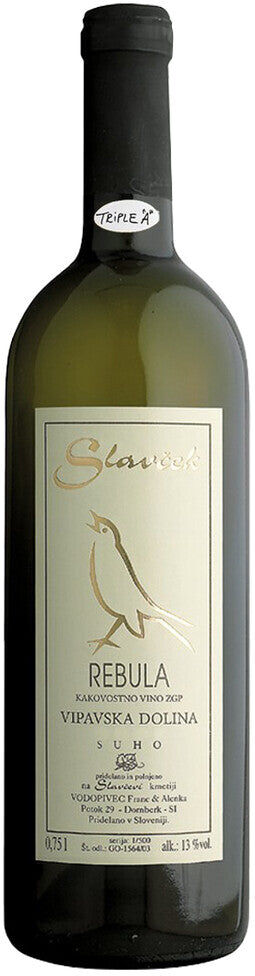
Ribolla Gialla Slavcek 2022This Ribolla of Slavcek was suggested during a wine tasting, where he racked up a number of positive comments among those present. After the tasting, we joined in the chorus: this Ribolla, born from an 8-days maceration on the skins, is a wine of great level. Between Friuli and Slovenia, white wines are a perfect combination of microclimate and productive mindset: thus bottles that do not fear the time and are put on the market a few years after the harvest. The wait is amply rewarded in the case of this Ribolla Slavcek, where the clear hints of ripe fruit and vibrant minerality give a perfect harmony on the palate. A macerated wine, rich and complex, enveloping and never get bored, supported by a freshness perfectly calibrated with the opulence. A great Ribolla.27,00 £*Shipping: 48,00 £Secure redirect to the provider
-
Ribolla Gialla La Roncaia 2023The Ribolla Gialla from La Roncaia faithfully represents what this native Friulian grape variety can offer in terms of salinity and taste freshness, bearing witness to a terroir that has been producing great white wines of depth and international charm for centuries. It captivates every palate primarily for its brilliant chromatic tone, but also for its genuine olfactory intensity and especially for its broad freshness, which constantly refreshes every sip. An authentic white characterized by elegance and persistence, excellent with any meal or paired with oysters, crustaceans, and mollusks of all kinds. La Roncaia Ribolla Gialla is produced with grapes from an estate vineyard located on Eocene-origin soils based on marls and clay and its planting density is about 4000 vines per hectare. The grapes are strictly hand-harvested towards the end of September, upon reaching optimal ripeness, and are transported to the winery to start the alcoholic fermentation. The latter takes place in stainless steel tanksat controlled temperature and is followed by a maturation of about 8 months on the fine lees, to give this territorial white body and sensory richness. The Ribolla Gialla from Roncaia presents itself with a brilliant straw yellow color and expresses, with remarkable intensity, an aromatic bouquet that opens with delicate floral notes, then shifts to tones of aromatic herbs like sage and finally concludes with citrus details of lemon zest. On the palate, it is mineral and has a broad refreshing charge, while its elegant structure is balanced by a soft roundness, due to the sur lie aging. An enveloping Friulian white that simply expresses elegance and territory, embodying the best characteristics of the Colli Orientali and making them known on the international scene.17,00 £*Shipping: 48,00 £Secure redirect to the provider
-
What are the differences between natural selection and artificial selection?
Natural selection is the process by which organisms better adapted to their environment tend to survive and reproduce more successfully, leading to the evolution of species over time. On the other hand, artificial selection is the process by which humans intentionally select and breed organisms with specific traits to produce offspring with desired characteristics. While natural selection occurs in nature without human intervention, artificial selection is driven by human manipulation and breeding practices. Additionally, natural selection is a gradual process that occurs over generations, while artificial selection can produce rapid changes in traits within a few generations. **
-
What does selection mean?
Selection refers to the process of choosing individuals with specific traits or characteristics to reproduce, leading to a change in the frequency of those traits in a population over time. This process can be natural, such as when certain traits provide a survival advantage in a particular environment, or artificial, when humans intentionally breed individuals with desired traits. Selection is a key mechanism of evolution, driving the adaptation of populations to their environments. **
-
What is natural selection?
Natural selection is the process by which organisms that are better adapted to their environment are more likely to survive and reproduce, passing on their advantageous traits to their offspring. Over time, this leads to the accumulation of beneficial traits in a population, increasing its overall fitness and ability to thrive in its environment. Natural selection is a key mechanism of evolution, driving the gradual change and adaptation of species over generations. **
-
What is artificial selection?
Artificial selection is the process by which humans intentionally breed plants or animals with specific desirable traits in order to produce offspring with those traits. This process has been used for thousands of years to create domesticated plants and animals that are better suited for human needs, such as higher crop yields or more docile behavior. Through selective breeding, humans can influence the genetic makeup of a population to create organisms with desired characteristics. **
* All prices are inclusive of VAT and, if applicable, plus shipping costs. The offer information is based on the details provided by the respective shop and is updated through automated processes. Real-time updates do not occur, so deviations can occur in individual cases. ** Note: Parts of this content were created by AI.