Buy casa-antigo.eu ?
We are moving the project
casa-antigo.eu .
Are you interested in purchasing the domain
casa-antigo.eu ?
domain@kv-gmbh.de · 0541-91531010
Buy casa-antigo.eu ?
Why do we need injectivity, surjectivity, or bijectivity?
Injectivity, surjectivity, and bijectivity are important concepts in mathematics because they help us understand the relationship between different sets and functions. Injectivity ensures that each element in the domain maps to a unique element in the codomain, which is useful for preventing information loss in functions. Surjectivity guarantees that every element in the codomain is mapped to by at least one element in the domain, ensuring that no information is left out. Bijectivity combines these two properties, providing a one-to-one correspondence between elements in the domain and codomain, making it easier to establish relationships and solve problems in various mathematical contexts. **
How can one show and justify the bijectivity?
One can show and justify the bijectivity of a function by demonstrating that it is both injective and surjective. Injectivity means that each element in the domain maps to a unique element in the codomain, while surjectivity means that every element in the codomain is mapped to by at least one element in the domain. By proving both of these properties, one can establish that the function is bijective, meaning it has a one-to-one correspondence between its domain and codomain. This can be done through mathematical proofs, such as using the definition of injectivity and surjectivity, or by showing the existence of an inverse function. **

Similar search terms for Bijectivity
Top-Angebote
Products related to Bijectivity:
-
Uplift Picks Vintage Retro Telephone Decor Antique Style Home Desk Ornament Vintage Retro Telephone Decor Antique Style Home Desk OrnamentAdd timeless charm to your space with this beautifully crafted vintage telephone decor. Designed for those who appreciate classic aesthetics, this retro phone ornament brings a sense of nostalgia and character to any room. Its aged and weathered...85,99 $*Shipping: 0,00 $Secure redirect to the provider
-
DAVEE FURNITURE "Davee Adjustable Antique Rustic Wood Bookcase - 29.5"" H x 63"" W x 12.6"" D"Maximize your storage space with the adjustable bookcase. Wood shelves and blocks stack forming beautiful voids and cubbies to house all the things in a perfectly curated manner.348,99 $*Shipping: 0,00 $Secure redirect to the provider



-
Examine the sets for injectivity, surjectivity, and bijectivity.
The sets can be examined for injectivity, surjectivity, and bijectivity by analyzing the relationship between the elements of the domain and the codomain. Injectivity can be determined by checking if each element in the domain maps to a unique element in the codomain. If there are no two distinct elements in the domain that map to the same element in the codomain, the function is injective. Surjectivity can be determined by checking if every element in the codomain has at least one pre-image in the domain. If every element in the codomain is mapped to by at least one element in the domain, the function is surjective. Bijectivity can be determined by checking if the function is both injective and surjective. If every element in the codomain has a unique pre-image in the domain, and every element in the codomain is mapped to, the function is bijective. **
-
What is the definition of injectivity, surjectivity, and bijectivity?
Injectivity refers to a function where each element in the domain maps to a unique element in the codomain. Surjectivity means that every element in the codomain is mapped to by at least one element in the domain. Bijectivity combines both injectivity and surjectivity, meaning that each element in the domain maps to a unique element in the codomain, and every element in the codomain is mapped to by at least one element in the domain. **
-
How can one prove bijectivity and countability through identity?
One can prove bijectivity by showing that for every element in the domain, there is a unique corresponding element in the codomain, and vice versa. This can be done through the use of the identity function, which maps each element to itself. If the identity function can be shown to be both injective (no two distinct elements in the domain map to the same element in the codomain) and surjective (every element in the codomain is mapped to by an element in the domain), then the function is bijective. Countability can also be proven through identity by showing that a set is countable if and only if there exists a bijection between the set and the natural numbers. By constructing a bijection between a set and the natural numbers using the identity function, one can prove that the set is countable. This is because the identity function maps each element in the set to a unique natural number, demonstrating that the set can be put into one-to-one correspondence with the natural **
-
What is the purpose of injectivity, surjectivity, or bijectivity?
The purpose of injectivity, surjectivity, and bijectivity is to understand and describe the relationship between two sets. Injectivity ensures that each element in the domain maps to a unique element in the codomain, surjectivity ensures that every element in the codomain is mapped to by at least one element in the domain, and bijectivity combines both properties to ensure that there is a one-to-one correspondence between the elements of the domain and the codomain. These properties are important in various areas of mathematics, such as function theory, linear algebra, and set theory, and help to characterize the behavior of functions and relations between sets. **

How do I prove injectivity, surjectivity, and bijectivity correctly?
To prove injectivity, you need to show that if f(x) = f(y), then x = y. This can be done by assuming f(x) = f(y) and then showing that x = y. To prove surjectivity, you need to show that for every y in the codomain, there exists an x in the domain such that f(x) = y. This can be done by taking an arbitrary y and finding an x that maps to it. To prove bijectivity, you need to show both injectivity and surjectivity. This can be done by proving that f is injective and surjective. **
For antique rustic oak furniture that you would like to lighten, what type of wood would be suitable?
For antique rustic oak furniture that you would like to lighten, a suitable wood type would be pine. Pine is a lighter wood with a natural grain that can complement the rustic style of the oak furniture. It is also easier to work with and can be stained or painted to achieve the desired lighter finish. Additionally, pine is a durable wood that can withstand the wear and tear of everyday use, making it a practical choice for furniture restoration. **
Top-Angebote
Products related to Bijectivity:
-
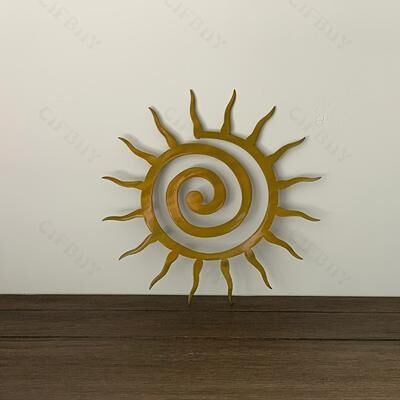
ModernMart Antique Coiled Star Metal Wall Sculpture For Outdoor Wall Decor & Rustic Garden Accent Antique Coiled Star Metal Wall Sculpture For Outdoor Wall Decor & Rustic Garden AccentTransform any blank wall into a statement of charm and personality with this beautifully crafted metal wall sculpture. Designed for homeowners who love rustic elegance, it adds depth and artistic flair to patios, verandahs, and indoor spaces alike....39,97 $*Shipping: 0,00 $Secure redirect to the provider
-
Inspire Essentials Vintage Retro Telephone Decor Antique Style Home Accent Ornament Vintage Retro Telephone Decor Antique Style Home Accent OrnamentAdd a nostalgic charm to your space with this beautifully designed vintage telephone decor. Perfect for those who love classic aesthetics it brings a sense of history and character into any room. The aged finish and detailed craftsmanship make this...52,48 $*Shipping: 0,00 $Secure redirect to the provider
-
Uplift Picks Vintage Retro Telephone Decor Antique Style Home Desk Ornament Vintage Retro Telephone Decor Antique Style Home Desk OrnamentAdd timeless charm to your space with this beautifully crafted vintage telephone decor. Designed for those who appreciate classic aesthetics, this retro phone ornament brings a sense of nostalgia and character to any room. Its aged and weathered...85,99 $*Shipping: 0,00 $Secure redirect to the provider
-
DAVEE FURNITURE "Davee Adjustable Antique Rustic Wood Bookcase - 29.5"" H x 63"" W x 12.6"" D"Maximize your storage space with the adjustable bookcase. Wood shelves and blocks stack forming beautiful voids and cubbies to house all the things in a perfectly curated manner.348,99 $*Shipping: 0,00 $Secure redirect to the provider
-
Why do we need injectivity, surjectivity, or bijectivity?
Injectivity, surjectivity, and bijectivity are important concepts in mathematics because they help us understand the relationship between different sets and functions. Injectivity ensures that each element in the domain maps to a unique element in the codomain, which is useful for preventing information loss in functions. Surjectivity guarantees that every element in the codomain is mapped to by at least one element in the domain, ensuring that no information is left out. Bijectivity combines these two properties, providing a one-to-one correspondence between elements in the domain and codomain, making it easier to establish relationships and solve problems in various mathematical contexts. **
-
How can one show and justify the bijectivity?
One can show and justify the bijectivity of a function by demonstrating that it is both injective and surjective. Injectivity means that each element in the domain maps to a unique element in the codomain, while surjectivity means that every element in the codomain is mapped to by at least one element in the domain. By proving both of these properties, one can establish that the function is bijective, meaning it has a one-to-one correspondence between its domain and codomain. This can be done through mathematical proofs, such as using the definition of injectivity and surjectivity, or by showing the existence of an inverse function. **
-
Examine the sets for injectivity, surjectivity, and bijectivity.
The sets can be examined for injectivity, surjectivity, and bijectivity by analyzing the relationship between the elements of the domain and the codomain. Injectivity can be determined by checking if each element in the domain maps to a unique element in the codomain. If there are no two distinct elements in the domain that map to the same element in the codomain, the function is injective. Surjectivity can be determined by checking if every element in the codomain has at least one pre-image in the domain. If every element in the codomain is mapped to by at least one element in the domain, the function is surjective. Bijectivity can be determined by checking if the function is both injective and surjective. If every element in the codomain has a unique pre-image in the domain, and every element in the codomain is mapped to, the function is bijective. **
-
What is the definition of injectivity, surjectivity, and bijectivity?
Injectivity refers to a function where each element in the domain maps to a unique element in the codomain. Surjectivity means that every element in the codomain is mapped to by at least one element in the domain. Bijectivity combines both injectivity and surjectivity, meaning that each element in the domain maps to a unique element in the codomain, and every element in the codomain is mapped to by at least one element in the domain. **
Similar search terms for Bijectivity
-
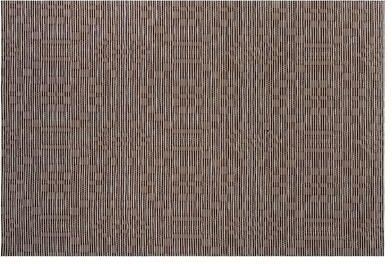
IH Casa Decor Woven Pvc Placemat Vintage Brown - Set of 12Featuring an eye-catching vintage pattern, these Woven PVC Placemats come in a brown color that makes them perfect to match your color scheme and interiors. Durable and versatile, you can use placemats for a variety of purposes.56,49 $*Shipping: 0,00 $Secure redirect to the provider
-
IH Casa Decor Woven Pvc Placemat Vintage Blue - Set of 12Featuring an eye-catching vintage pattern, these Woven PVC Placemats come in a blue color that makes them perfect to match your color scheme and interiors. Durable and versatile, you can use placemats for a variety of purposes.56,49 $*Shipping: 0,00 $Secure redirect to the provider
-
How can one prove bijectivity and countability through identity?
One can prove bijectivity by showing that for every element in the domain, there is a unique corresponding element in the codomain, and vice versa. This can be done through the use of the identity function, which maps each element to itself. If the identity function can be shown to be both injective (no two distinct elements in the domain map to the same element in the codomain) and surjective (every element in the codomain is mapped to by an element in the domain), then the function is bijective. Countability can also be proven through identity by showing that a set is countable if and only if there exists a bijection between the set and the natural numbers. By constructing a bijection between a set and the natural numbers using the identity function, one can prove that the set is countable. This is because the identity function maps each element in the set to a unique natural number, demonstrating that the set can be put into one-to-one correspondence with the natural **
-
What is the purpose of injectivity, surjectivity, or bijectivity?
The purpose of injectivity, surjectivity, and bijectivity is to understand and describe the relationship between two sets. Injectivity ensures that each element in the domain maps to a unique element in the codomain, surjectivity ensures that every element in the codomain is mapped to by at least one element in the domain, and bijectivity combines both properties to ensure that there is a one-to-one correspondence between the elements of the domain and the codomain. These properties are important in various areas of mathematics, such as function theory, linear algebra, and set theory, and help to characterize the behavior of functions and relations between sets. **
-
How do I prove injectivity, surjectivity, and bijectivity correctly?
To prove injectivity, you need to show that if f(x) = f(y), then x = y. This can be done by assuming f(x) = f(y) and then showing that x = y. To prove surjectivity, you need to show that for every y in the codomain, there exists an x in the domain such that f(x) = y. This can be done by taking an arbitrary y and finding an x that maps to it. To prove bijectivity, you need to show both injectivity and surjectivity. This can be done by proving that f is injective and surjective. **
-
For antique rustic oak furniture that you would like to lighten, what type of wood would be suitable?
For antique rustic oak furniture that you would like to lighten, a suitable wood type would be pine. Pine is a lighter wood with a natural grain that can complement the rustic style of the oak furniture. It is also easier to work with and can be stained or painted to achieve the desired lighter finish. Additionally, pine is a durable wood that can withstand the wear and tear of everyday use, making it a practical choice for furniture restoration. **
* All prices are inclusive of VAT and, if applicable, plus shipping costs. The offer information is based on the details provided by the respective shop and is updated through automated processes. Real-time updates do not occur, so deviations can occur in individual cases. ** Note: Parts of this content were created by AI.