Buy casa-antigo.eu ?
We are moving the project
casa-antigo.eu .
Are you interested in purchasing the domain
casa-antigo.eu ?
domain@kv-gmbh.de · 0541-91531010
Buy casa-antigo.eu ?
What is proton donation and proton acceptance in chemistry?
Proton donation and proton acceptance are key concepts in acid-base chemistry. Proton donation refers to the transfer of a hydrogen ion (proton) from one substance to another. This typically occurs when an acid donates a proton to a base. Proton acceptance, on the other hand, involves the acceptance of a proton by a substance, often a base, leading to the formation of a new chemical species. These processes are fundamental to understanding the behavior of acids and bases in chemical reactions. **
What is meant by proton donors and proton acceptors?
Proton donors are substances that can donate a proton (H+) to another substance. This typically involves the release of a hydrogen ion. Proton acceptors, on the other hand, are substances that can accept a proton from another substance. This typically involves the uptake of a hydrogen ion. In the context of acid-base reactions, proton donors are acids, while proton acceptors are bases. **


Similar search terms for Proton
Top-Angebote
Products related to Proton:
-
Inspire Essentials Vintage Retro Telephone Decor Antique Style Home Accent Ornament Vintage Retro Telephone Decor Antique Style Home Accent OrnamentAdd a nostalgic charm to your space with this beautifully designed vintage telephone decor. Perfect for those who love classic aesthetics it brings a sense of history and character into any room. The aged finish and detailed craftsmanship make this...52,48 $*Shipping: 0,00 $Secure redirect to the provider
-
Uplift Picks Vintage Retro Telephone Decor Antique Style Home Desk Ornament Vintage Retro Telephone Decor Antique Style Home Desk OrnamentAdd timeless charm to your space with this beautifully crafted vintage telephone decor. Designed for those who appreciate classic aesthetics, this retro phone ornament brings a sense of nostalgia and character to any room. Its aged and weathered...85,99 $*Shipping: 0,00 $Secure redirect to the provider
-
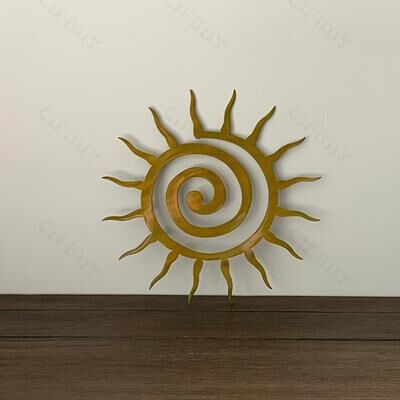
ModernMart Antique Coiled Star Metal Wall Sculpture For Outdoor Wall Decor & Rustic Garden Accent Antique Coiled Star Metal Wall Sculpture For Outdoor Wall Decor & Rustic Garden AccentTransform any blank wall into a statement of charm and personality with this beautifully crafted metal wall sculpture. Designed for homeowners who love rustic elegance, it adds depth and artistic flair to patios, verandahs, and indoor spaces alike....39,97 $*Shipping: 0,00 $Secure redirect to the provider
-
DAVEE FURNITURE "Davee Adjustable Antique Rustic Wood Bookcase - 29.5"" H x 63"" W x 12.6"" D"Maximize your storage space with the adjustable bookcase. Wood shelves and blocks stack forming beautiful voids and cubbies to house all the things in a perfectly curated manner.348,99 $*Shipping: 0,00 $Secure redirect to the provider



-
What determines a proton donor and a proton acceptor?
A proton donor is a substance that can release a proton (H+) in a chemical reaction, while a proton acceptor is a substance that can accept a proton. This ability is determined by the presence of a hydrogen atom with a positive charge (H+) in the molecule. In general, substances with a lone pair of electrons, such as a hydroxide ion (OH-) or an amine group (NH2), can act as proton acceptors, while substances with a hydrogen atom bonded to an electronegative atom, such as a hydrochloric acid (HCl) or acetic acid (CH3COOH), can act as proton donors. **
-
Why are carboxylic acids proton donors and amines proton acceptors?
Carboxylic acids are proton donors because they contain a highly electronegative oxygen atom that can stabilize the resulting carboxylate anion by delocalizing the negative charge. Amines, on the other hand, are proton acceptors because they contain a lone pair of electrons on the nitrogen atom that can readily accept a proton to form a positively charged ammonium ion. This ability to donate or accept protons is due to the presence of functional groups in these molecules that can easily gain or lose a hydrogen ion in solution. **
-
Are there only proton-proton collisions in the particle accelerator?
No, there are not only proton-proton collisions in the particle accelerator. Particle accelerators can also collide protons with other particles such as electrons or heavy ions like lead or gold. These collisions are important for studying different aspects of particle physics and for exploring the fundamental forces and particles that make up the universe. By colliding different types of particles, scientists can gain a better understanding of the fundamental building blocks of matter and the forces that govern their interactions. **
-
How secure is Proton?
Proton is considered to be a highly secure email service. It offers end-to-end encryption for emails, meaning that only the sender and recipient can read the contents of the messages. Proton also uses strong encryption protocols to protect user data and has a strict privacy policy that ensures user information is not shared with third parties. Additionally, Proton is based in Switzerland, known for its strong privacy laws, adding an extra layer of security for users. **
What are proton currents?
Proton currents refer to the flow of protons, which are positively charged particles, through a medium. This flow of protons can occur in various contexts, such as in biological systems, in proton-conducting materials, or in the context of proton exchange membrane fuel cells. Proton currents are important in many physiological processes, such as the generation of energy in cells through the process of oxidative phosphorylation. In the context of proton-conducting materials and fuel cells, proton currents are important for the generation of electrical energy. **
What is proton decay?
Proton decay is a theoretical process in which a proton, one of the fundamental particles that make up an atom's nucleus, decays into lighter particles. This process is predicted by some grand unified theories (GUTs) that seek to unify the electromagnetic, weak, and strong nuclear forces. If proton decay were to occur, it would have profound implications for our understanding of the fundamental forces and particles in the universe. However, despite extensive experimental efforts, proton decay has not been observed, and its theoretical prediction remains unconfirmed. **
Top-Angebote
Products related to Proton:
-
Union Rustic Antigo Solid Wood Bench Natural Mango H45 x W200 x D46cmMade from solid Mango wood with a distressed steel handle and its trestle style table this range mixes traditional style with a modern twist. Handmade in India you will see marks of where the artisan had built this piece, pinheads are common, and you may seesaw and chisel marks also the different grains and naturally occurring shakes in the wood make this truly unique. If you appreciate rural craftsmanship and want an item that will make a statement in your home this is for you. Union Rustic Size: H45 x W200 x D46cm319,99 £*Shipping: 19,99 £Secure redirect to the provider
-
Union Rustic Antigo Solid Wood Bench Natural Mango H45 x W135 x D46cmMade from solid Mango wood with a distressed steel handle and its trestle style table this range mixes traditional style with a modern twist. Handmade in India you will see marks of where the artisan had built this piece, pinheads are common, and you may seesaw and chisel marks also the different grains and naturally occurring shakes in the wood make this truly unique. If you appreciate rural craftsmanship and want an item that will make a statement in your home this is for you. Union Rustic Size: H45 x W135 x D46cm244,99 £*Shipping: 0,00 £Secure redirect to the provider
-
Inspire Essentials Vintage Retro Telephone Decor Antique Style Home Accent Ornament Vintage Retro Telephone Decor Antique Style Home Accent OrnamentAdd a nostalgic charm to your space with this beautifully designed vintage telephone decor. Perfect for those who love classic aesthetics it brings a sense of history and character into any room. The aged finish and detailed craftsmanship make this...52,48 $*Shipping: 0,00 $Secure redirect to the provider
-
Uplift Picks Vintage Retro Telephone Decor Antique Style Home Desk Ornament Vintage Retro Telephone Decor Antique Style Home Desk OrnamentAdd timeless charm to your space with this beautifully crafted vintage telephone decor. Designed for those who appreciate classic aesthetics, this retro phone ornament brings a sense of nostalgia and character to any room. Its aged and weathered...85,99 $*Shipping: 0,00 $Secure redirect to the provider
-
What is proton donation and proton acceptance in chemistry?
Proton donation and proton acceptance are key concepts in acid-base chemistry. Proton donation refers to the transfer of a hydrogen ion (proton) from one substance to another. This typically occurs when an acid donates a proton to a base. Proton acceptance, on the other hand, involves the acceptance of a proton by a substance, often a base, leading to the formation of a new chemical species. These processes are fundamental to understanding the behavior of acids and bases in chemical reactions. **
-
What is meant by proton donors and proton acceptors?
Proton donors are substances that can donate a proton (H+) to another substance. This typically involves the release of a hydrogen ion. Proton acceptors, on the other hand, are substances that can accept a proton from another substance. This typically involves the uptake of a hydrogen ion. In the context of acid-base reactions, proton donors are acids, while proton acceptors are bases. **
-
What determines a proton donor and a proton acceptor?
A proton donor is a substance that can release a proton (H+) in a chemical reaction, while a proton acceptor is a substance that can accept a proton. This ability is determined by the presence of a hydrogen atom with a positive charge (H+) in the molecule. In general, substances with a lone pair of electrons, such as a hydroxide ion (OH-) or an amine group (NH2), can act as proton acceptors, while substances with a hydrogen atom bonded to an electronegative atom, such as a hydrochloric acid (HCl) or acetic acid (CH3COOH), can act as proton donors. **
-
Why are carboxylic acids proton donors and amines proton acceptors?
Carboxylic acids are proton donors because they contain a highly electronegative oxygen atom that can stabilize the resulting carboxylate anion by delocalizing the negative charge. Amines, on the other hand, are proton acceptors because they contain a lone pair of electrons on the nitrogen atom that can readily accept a proton to form a positively charged ammonium ion. This ability to donate or accept protons is due to the presence of functional groups in these molecules that can easily gain or lose a hydrogen ion in solution. **
Similar search terms for Proton
-
ModernMart Antique Coiled Star Metal Wall Sculpture For Outdoor Wall Decor & Rustic Garden Accent Antique Coiled Star Metal Wall Sculpture For Outdoor Wall Decor & Rustic Garden AccentTransform any blank wall into a statement of charm and personality with this beautifully crafted metal wall sculpture. Designed for homeowners who love rustic elegance, it adds depth and artistic flair to patios, verandahs, and indoor spaces alike....39,97 $*Shipping: 0,00 $Secure redirect to the provider
-
DAVEE FURNITURE "Davee Adjustable Antique Rustic Wood Bookcase - 29.5"" H x 63"" W x 12.6"" D"Maximize your storage space with the adjustable bookcase. Wood shelves and blocks stack forming beautiful voids and cubbies to house all the things in a perfectly curated manner.348,99 $*Shipping: 0,00 $Secure redirect to the provider
-
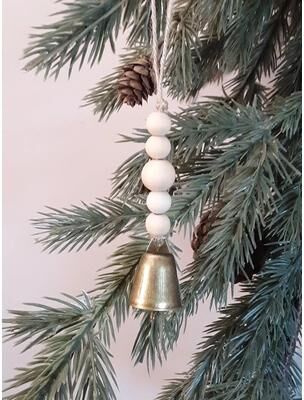
Inspire Select Vintage Hanging Cow Bells Christmas Ornaments Rustic Antique Bell Tree Decorations cow BellAdd timeless rustic charm to your holiday dcor with ornaments that capture the warmth of traditional Christmas celebrations. These beautiful vintage Christmas bell ornaments feature an antiquestyle cow bell design that brings a classic farmhouse...44,95 $*Shipping: 0,00 $Secure redirect to the provider
-
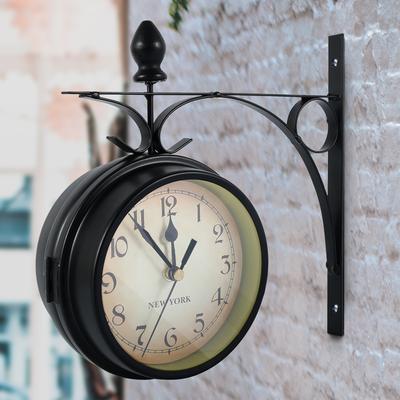
Daily Discovery Retro Double Sided Wall Clock Silent Antique Style Vintage Home Decor Retro Double Sided Wall Clock Silent Antique Style Vintage Home DecorBring classic character and functional beauty to your walls with this elegant retro wall clock designed to add a timeless touch to any space. Featuring a unique doublesided design, this decorative clock offers easy viewing from different angles...79,97 $*Shipping: 0,00 $Secure redirect to the provider
-
Are there only proton-proton collisions in the particle accelerator?
No, there are not only proton-proton collisions in the particle accelerator. Particle accelerators can also collide protons with other particles such as electrons or heavy ions like lead or gold. These collisions are important for studying different aspects of particle physics and for exploring the fundamental forces and particles that make up the universe. By colliding different types of particles, scientists can gain a better understanding of the fundamental building blocks of matter and the forces that govern their interactions. **
-
How secure is Proton?
Proton is considered to be a highly secure email service. It offers end-to-end encryption for emails, meaning that only the sender and recipient can read the contents of the messages. Proton also uses strong encryption protocols to protect user data and has a strict privacy policy that ensures user information is not shared with third parties. Additionally, Proton is based in Switzerland, known for its strong privacy laws, adding an extra layer of security for users. **
-
What are proton currents?
Proton currents refer to the flow of protons, which are positively charged particles, through a medium. This flow of protons can occur in various contexts, such as in biological systems, in proton-conducting materials, or in the context of proton exchange membrane fuel cells. Proton currents are important in many physiological processes, such as the generation of energy in cells through the process of oxidative phosphorylation. In the context of proton-conducting materials and fuel cells, proton currents are important for the generation of electrical energy. **
-
What is proton decay?
Proton decay is a theoretical process in which a proton, one of the fundamental particles that make up an atom's nucleus, decays into lighter particles. This process is predicted by some grand unified theories (GUTs) that seek to unify the electromagnetic, weak, and strong nuclear forces. If proton decay were to occur, it would have profound implications for our understanding of the fundamental forces and particles in the universe. However, despite extensive experimental efforts, proton decay has not been observed, and its theoretical prediction remains unconfirmed. **
* All prices are inclusive of VAT and, if applicable, plus shipping costs. The offer information is based on the details provided by the respective shop and is updated through automated processes. Real-time updates do not occur, so deviations can occur in individual cases. ** Note: Parts of this content were created by AI.